
- Pioneering WoodShip Concept: The German Aerospace Center (DLR) won the AIDA Innovation Hub sustainability category for proposing the use of lightweight, renewable timber in modern cruise ship construction.
- Significant Weight and Emissions Reduction: Utilizing treated woods like beech and albasia in place of heavier materials can reduce component weight by around 30 percent, lightening upper decks to boost fuel economy and lower emissions.
- Rigorous Fire Safety Testing: DLR is adapting proven high-speed rail fireproofing standards to maritime regulations, with extensive component testing planned for a new fire laboratory opening in 2027.
- Collaborative Pilot Studies with AIDA: While fleet-wide adoption is not yet finalized, DLR and AIDA are advancing joint studies and pilot frameworks to evaluate the technical and economic viability of timber installations on active ships
The cruise industry is sailing toward a greener horizon as cutting-edge research explores bringing natural timber back to modern ship architecture. The German Aerospace Center, known as DLR, recently captured top honors in the sustainability category at the AIDA Innovation Hub in Rostock with its pioneering WoodShip project. By reimagining how sustainable materials can enhance modern naval engineering, the initiative demonstrates that lightweight, renewable wood can play a vital structural role on contemporary cruise liners.
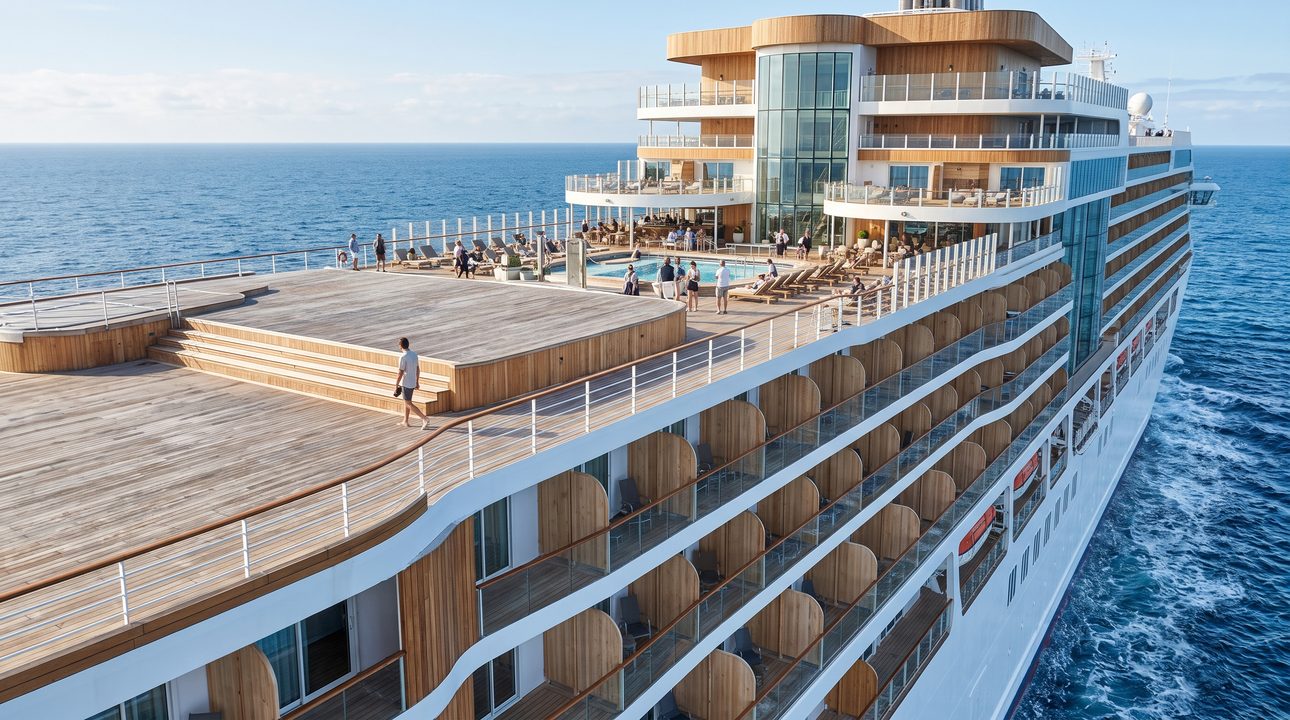
Rather than building an entire vessel out of timber, the WoodShip concept introduces treated wood to specific exterior areas, such as balcony partitions, privacy screens, and decorative cladding. DLR engineers, who have extensive experience testing lightweight materials for high-speed rail and automotive vehicles, noted that woods such as beech and albasia provide substantial weight reductions. Compared to dense structural steel, these bio-based alternatives can reduce component weight by approximately 30 percent. Implementing these lightweight structures on upper passenger decks lowers the ship’s center of gravity, which in turn optimizes fuel efficiency and significantly curbs carbon emissions during voyages.
Safety remains the highest priority for both maritime regulators and researchers. DLR has already proven that fire-impregnated wood can satisfy Europe’s strictest rail fire safety standards, and it is preparing to test components against maritime classifications in a specialized fire laboratory opening in 2027. While cruise line AIDA will evaluate practical implementation through upcoming pilot studies, the collaboration marks an inspiring milestone in sustainable marine design. By combining renewable forestry with aerospace-grade engineering, WoodShip charts an exciting path toward eco-friendly cruising that honors traditional craftsmanship while protecting the world’s oceans.