
- World First Maritime Tunnel: Norway has officially approved funding for a historic 1.7-kilometer passageway designed to navigate full-scale commercial ships directly through a mountain peninsula.
- Bypassing Hazardous Coastlines: The infrastructure provides a secure alternative to the dangerous Stadlandet Peninsula waters, where extreme currents and massive multi-directional waves frequently stall shipping traffic.
- Massive Environmental Benefits: Diverting heavy freight from roads and rail lines into the highly efficient maritime shortcut is projected to reduce shipping fuel consumption and emissions by up to 60 percent.
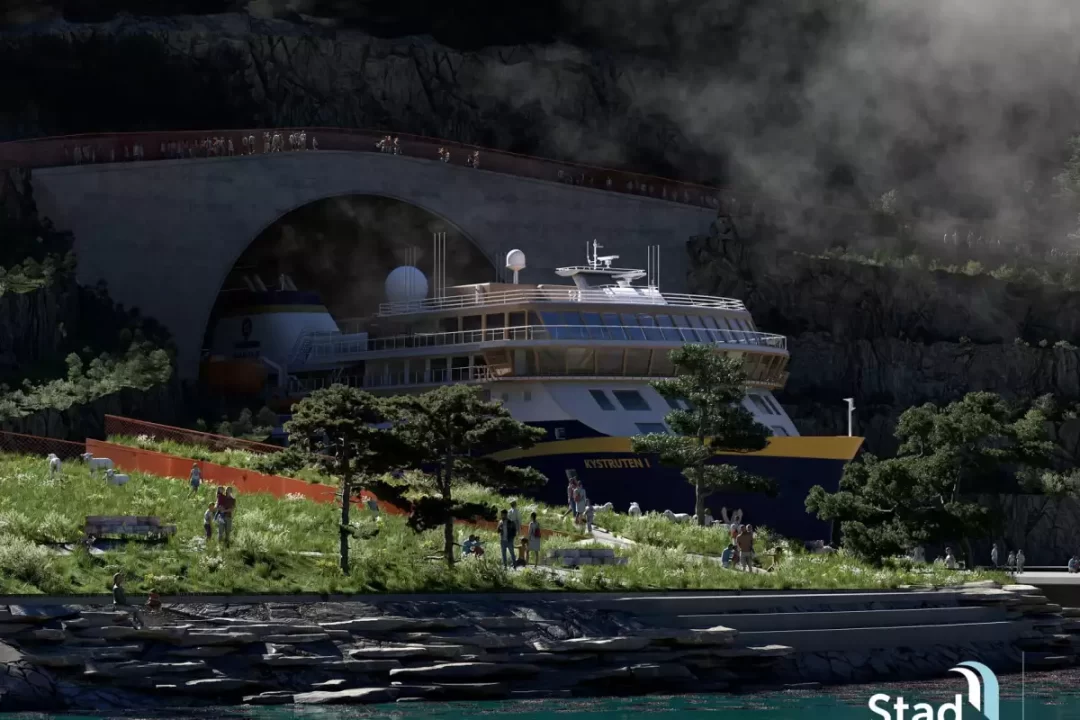
- Iconic Architectural Design: Renowned design firm Snøhetta has crafted the tunnel portals to integrate seamlessly with the natural landscape, featuring rough-cut local stone terraces and dedicated pedestrian viewing platforms.
An ambitious maritime engineering feat is officially moving forward as Norway greenlights construction on the highly anticipated Stad Ship Tunnel. This historic project represents the world’s first full-scale ocean transit tunnel designed specifically to guide large commercial vessels through solid mountain rock. By carving a path directly through the weather-beaten Stadlandet Peninsula on the country’s western coast, the innovative infrastructure project will allow ships to entirely bypass one of the most hazardous and unpredictable marine routes in Northern Europe.
The primary catalyst for this massive 8.6 billion Norwegian kroner investment is maritime safety and commercial predictability. The waters surrounding the peninsula are notoriously unstable, characterized by complex underwater topography and fierce currents that generate massive waves arriving from multiple directions simultaneously. These rough conditions routinely trap fishing fleets, transport vessels, and passenger ferries in costly, multi-day delays. Connecting two scenic fjords over a short distance, the new passage will completely eliminate these dangerous bottlenecks, offering a highly reliable, weather-protected alternative that ensures smooth sailing year-round.
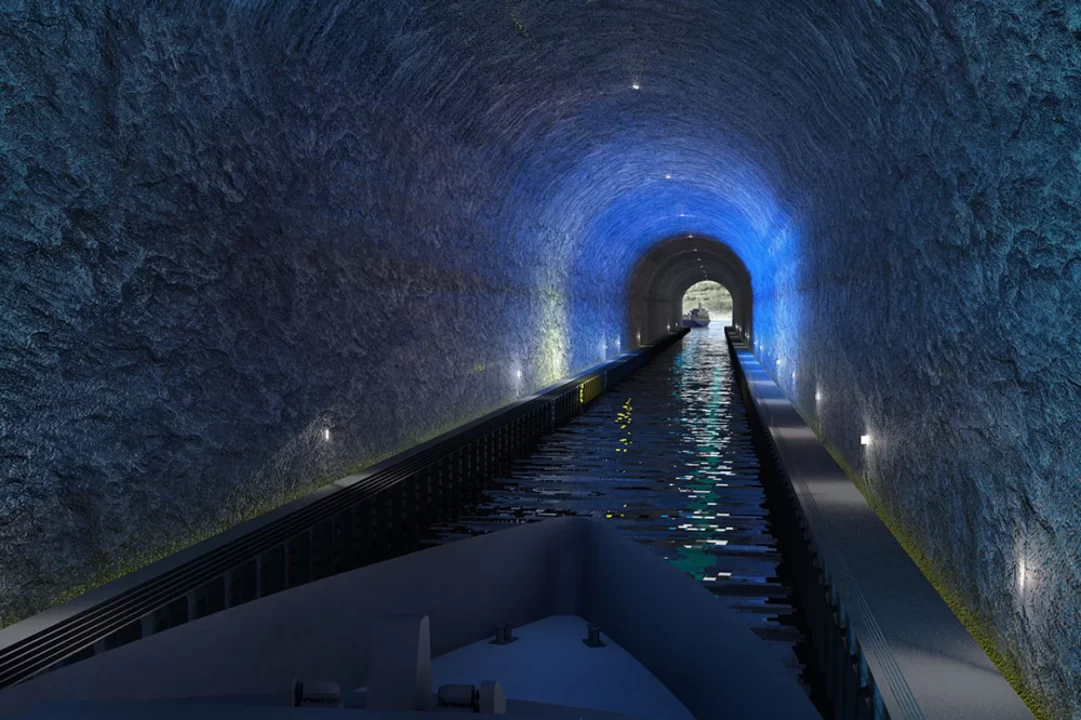
Engineered to accommodate large vessels like coastal cruise ships and regional freight carriers, the completed tunnel will measure 1.7 kilometers in length, 50 meters in height, and 36 meters in width. To minimize its visual footprint, the iconic architectural firm Snøhetta has designed custom terraces and wire-cut stone entrance structures that allow the modern portals to blend beautifully into the local landscape. Beyond vastly improving passenger and crew safety, the historic development is projected to slash fuel consumption and emissions by up to 60 percent by shifting freight away from mainland roads. With construction slated to begin in early 2027 and a five-year timeline ahead, this spectacular landmark is set to boost regional tourism and transform global maritime transit logistics.
