
- The Biometric Entry/Exit System becomes mandatory for all non-U.S. citizens, including previously exempt Canadian nationals, by December 26, 2025.
- Visa Waiver Program travelers must disclose up to ten years of digital history, including social media and email records, for ESTA applications starting in Spring 2026.
- International visitors will face higher fees for U.S. National Parks, adding an approximate $100 daily charge to regular admission costs beginning in 2026.
- Visa applicants for employment will undergo more rigorous screening procedures, including analysis of their digital footprint, which may lead to application delays.
Starting in 2026, the United States will enact a series of new travel regulations impacting non-U.S. citizens from nations including Canada, Mexico, Brazil, the UK, and Spain. These changes are intended to enhance national security, reduce identity fraud, and modernize border control procedures, though they are expected to result in longer wait times and increased costs for travelers.
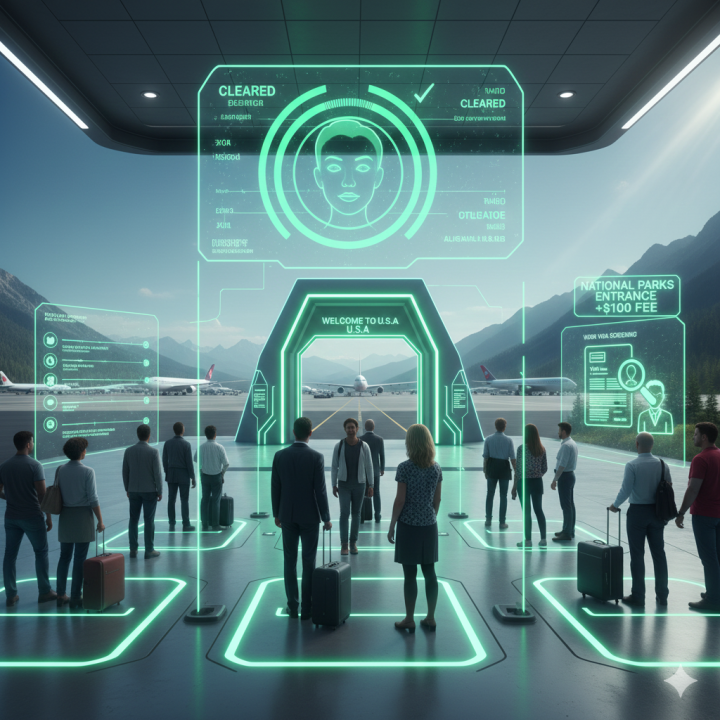
A significant change is the full implementation of the Biometric Entry/Exit System by December 26, 2025. This requires mandatory facial biometrics, or facial scans, for all non-U.S. citizens entering or exiting the country by air, land, or sea. This is a crucial change for Canadian nationals, who were historically exempt from some biometric checks. The removal of this exemption may strain travel dynamics between the U.S. and Canada and could contribute to longer wait times at border checkpoints.
For Visa Waiver Program (VWP) travelers, including those from the UK and Spain, a new ESTA rule will take effect in Spring 2026. This regulation will mandate applicants to disclose detailed digital history, such as social media profiles, email addresses, and phone numbers used over the previous five to ten years. This effort to assess digital footprints for potential connections to hostile groups is intended to provide authorities with a more comprehensive background check, though it raises concerns about privacy and increased scrutiny for applicants.
Additionally, starting in late 2025, there will be more intense visa screening procedures for foreign nationals applying for work visas like the H-1B or L-1, involving deeper background checks into digital activities, which is expected to cause delays in the approval process. Furthermore, international visitors will face higher fees when visiting U.S. national parks starting in 2026, with an additional charge of approximately $100 per day on top of regular entrance fees. This measure aims to boost park maintenance funding but may deter international tourism to these sites. These collective changes mark a shift toward a more secure and digitally controlled border system.