
- Regional Economic Impact: Major cities like Seattle and Detroit are seeing sharp declines due to their proximity to the Canadian border and a collapse in land-based travel.
- Cost and Policy Barriers: Increased visa integrity fees and high airfares are cited as primary deterrents for overseas travelers.
- Shifting Global Markets: While traditional Western markets are declining, East Asian markets are beginning a slow recovery from previous years.
- Geopolitical Influence: Sentiment regarding U.S. trade policies and political uncertainty is actively influencing travel decisions for international tourists.
The United States is experiencing a notable downturn in international tourism as 2025 comes to a close. States including Nevada, Washington, New York, Florida, California, and Michigan are reporting significant drops in visitor arrivals. Major urban hubs such as Las Vegas, Seattle, New York City, and Miami are particularly affected, facing challenges that impact local hospitality, retail, and entertainment sectors.
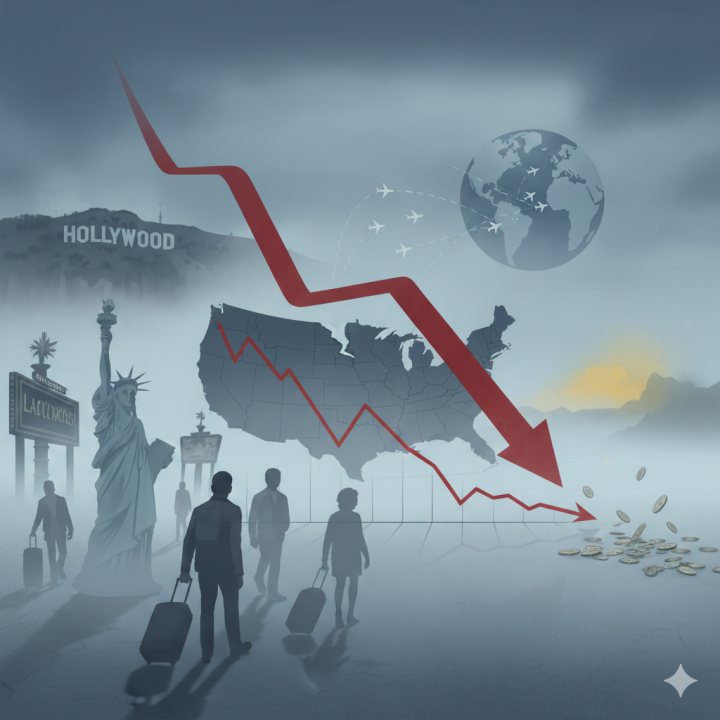
Data indicates that the decline is driven by a combination of economic and geopolitical factors. Rising travel costs, including high airfares and increased visa fees, have made the U.S. a less accessible destination for many. Additionally, visa restrictions and shifting global travel preferences have diverted potential tourists to other regions.
The decline is most pronounced among traditional markets. Canadian visitation has seen a substantial decrease, particularly in land travel, which fell by 28%. This shift is attributed to geopolitical tensions and perceived policy changes that have dampened interest in cross-border travel. Western Europe and parts of Asia, specifically South Korea, have also shown weakness.
Conversely, there are specific areas of growth. Markets in China, Taiwan, and Japan are showing signs of recovery, while Mexico and Argentina have emerged as bright spots with increased visitation. Despite these gains, the national inbound volume is projected to drop from 72.4 million in 2024 to 67.9 million in 2025, representing a 6.2% overall decrease. This trend highlights a challenging period for the U.S. tourism economy as it navigates a shifting global landscape.

Based on the reports from late 2025, the following table summarizes the projected and observed declines in international visitation for key U.S. cities and states.
2025 International Tourism Decline by Destination
| Destination | Type | Projected Decline (%) | Key Driver |
| Seattle, WA | City | 26.9% | Collapse in Canadian cross-border travel |
| Portland, OR | City | 18.3% | Reduced Canadian visits and image concerns |
| Detroit, MI | City | 17.3% | Proximity to Canada; lower land crossings |
| New York, NY | City | 12.0% | High costs and visa restrictions |
| Las Vegas, NV | City | 10.2% | High airfare and competition from global sites |
| San Francisco, CA | City | 9.4% | Increased global competition and visa hurdles |
| Los Angeles, CA | City | 9.4% | Reduced air arrivals from Canada and Europe |
| Miami, FL | City | 5.0% | Slowdown in long-haul family travel |
| Orlando, FL | City | 5.0% | Reduced airport capacity for international flights |
| National Average | U.S. | 6.2% | Rising travel costs and global shifts |