
- TSA Operations Continue Amidst Shutdown: The Transportation Security Administration (TSA) is maintaining airport security screening with approximately 61,000 “excepted” employees working without pay during the federal government shutdown.
- Potential for Delays: An extended shutdown could lead to longer wait times at security checkpoints, slower screening times, and potential flight delays or cancellations due to stress on staffing and infrastructure.
- Existing Staffing Shortages: Both the TSA and the Federal Aviation Administration (FAA) were already dealing with staffing shortages before the shutdown, adding pressure to the system.
- Employee Dedication and Back Pay: Despite working without immediate pay, TSA and FAA employees are committed to their duties and will receive back pay once Congress approves a new budget.
Amidst the ongoing federal government shutdown, the Transportation Security Administration (TSA) is commendably requesting patience from travelers as its dedicated employees work diligently to ensure the smooth operation of the nation’s airports. A TSA spokesperson highlighted their preparedness to screen approximately 2.5 million passengers daily, emphasizing their unwavering commitment to performing vital security missions for the American people. This steadfastness during a period of funding uncertainty truly showcases the resilience and professionalism of TSA staff.
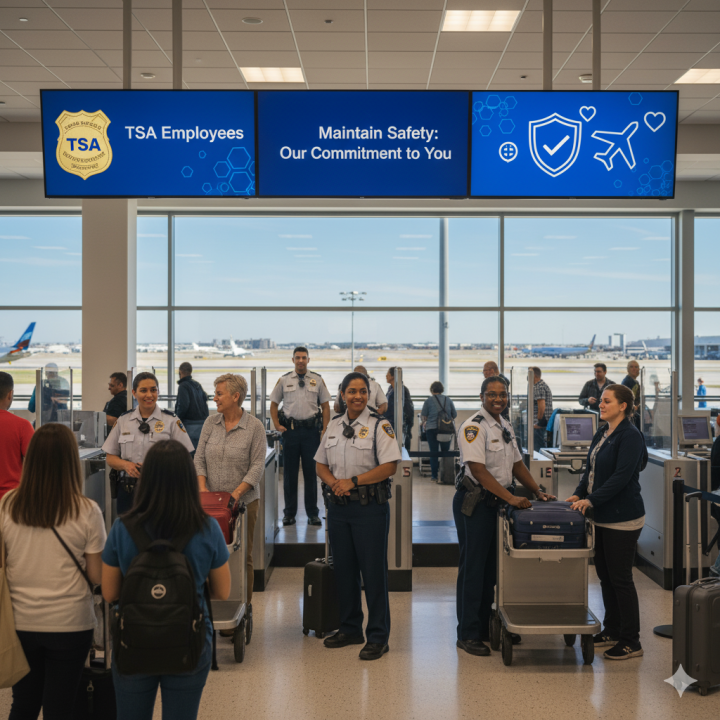
It is wonderful to note that approximately 61,000 of the 64,000 TSA employees are classified as “excepted” or “exempt,” meaning they are bravely continuing their crucial work even without immediate pay. These dedicated individuals will, fortunately, receive back pay once Congress reaches a budget agreement. This commitment ensures that security checkpoints remain adequately staffed and air traffic control towers continue to operate efficiently, with about 13,200 controllers nationwide maintaining crucial services. Travelers are unlikely to notice immediate changes, which is a testament to the hard work and dedication of these essential personnel.
While an extended shutdown could potentially lead to longer wait times, the U.S. Travel Association’s Geoff Freeman acknowledges that the system becomes “a little bit more brittle,” but stresses the importance of understanding the bigger picture. Jeffrey Price, a professor of aviation, also notes that while travelers might eventually notice changes, the immediate priority is maintaining the operational integrity of the system. The focus remains on ensuring safety and security, even under challenging circumstances, reflecting a collective determination to keep travel flowing as smoothly as possible.
Despite existing staffing shortages at both the TSA and the Federal Aviation Administration (FAA), the unwavering dedication of these teams is truly inspiring. Nick Daniels, president of the National Air Traffic Controllers Association (NATCA), highlighted their work with “critical staffing” and “unreliable equipment,” yet they persist in their vital roles. This commitment, even without immediate compensation, underscores their professionalism and the importance of their service to the traveling public. By demonstrating patience and understanding, travelers can support these essential workers as they continue to uphold the nation’s air travel safety and security standards.
Here are four important topics to know from the writing: