
- Divergent Demand Trends: Regional theme parks, such as Six Flags, experienced declines in attendance and season pass sales due to economic uncertainty and extreme weather, while major destination parks like Disney and Universal saw increased spending, particularly from wealthier guests.
- Economic Impact on Regional Parks: Lower and middle-income consumers, facing financial pressures, are reportedly reducing visits and overnight stays at regional theme parks and waterparks, leading to concerns for the associated hotel industry.
- Orlando Market Growth and New Developments: The Orlando market has seen demand growth, partly due to the opening of Universal’s Epic Universe park, which added new attractions and 2,000 hotel rooms, drawing incremental demand without significantly cannibalizing existing parks.
- Resilience of Luxury and Upper-Tier Segments: Higher-income travelers continue to spend robustly on luxury and upper-upscale accommodations and comprehensive travel packages, driving average daily rate (ADR) and revenue per available room (RevPAR) growth in markets like Orlando.
The theme park and surrounding hotel industries in the U.S. have experienced varied demand levels recently. While hundreds of theme parks operate across the country, ranging from small attractions to large multi-day destinations, this summer presented a mixed picture for attendance.

Richard Zimmerman, CEO of Six Flags Entertainment, reported a significant decline in attendance at the company’s parks during the first six months of the year. He attributed this to lower renewal rates for season passes and reduced single-day pass sales, largely influenced by extreme weather conditions and economic uncertainty. Zimmerman noted that these macroeconomic factors likely caused guests to delay park visits early in the operating season, making fewer impulse buys and exhibiting a more value-conscious mindset. He emphasized that the second half of the year typically defines their business performance.
Forbes, citing Consumer Edge credit card spending data, reported a 5% year-over-year decrease in overall spending at U.S. theme parks by late August. This decline was linked to lower- and middle-income guests feeling less financially secure. Conversely, larger destination parks, such as Disney and Universal, which have higher admission prices, saw increased visitor spending from May through July, suggesting financial resilience among wealthier guests.
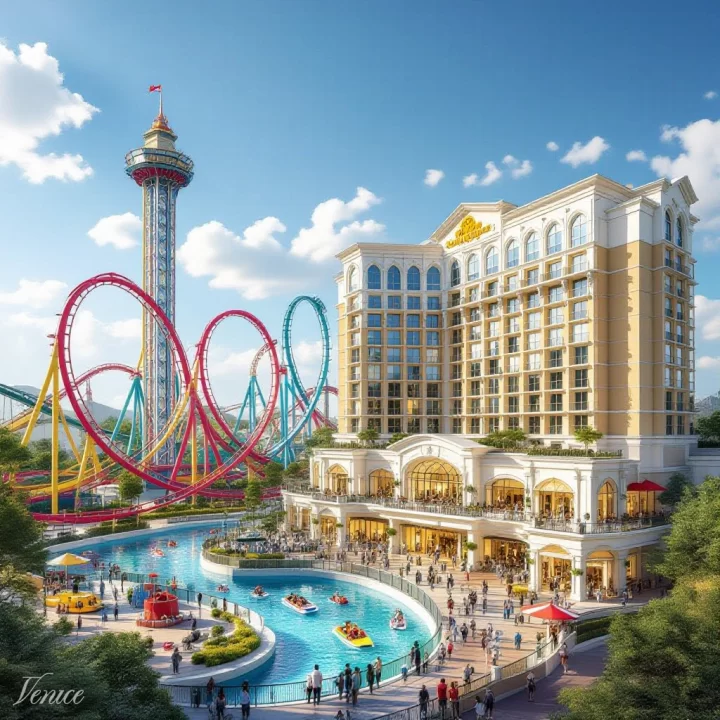
David Sangree, president of Hotel & Leisure Advisors, indicated that the reported downturn for regional parks, like Six Flags, is a concern for the hotel industry. While many regional park visitors are day-trippers, a notable number book overnight hotel stays. Sangree highlighted that economic pressures and reduced financial aid for middle- and lower-income customers are key concerns for theme park and waterpark operators. He noted that these consumers have less disposable income for park visits, leading to fewer overnight stays. He also mentioned that park prices have significantly increased. Great Wolf Lodge, for instance, eliminated its $40 resort fee this year, though parking fees remain, posing a dilemma for owners regarding pricing strategies amidst economic pressures.
Elias Thompson, regional vice president of operations at Shaner Hotel Group, described Hersheypark in Hershey, Pennsylvania, as a regional park attracting mostly drive-to guests from major feeder markets. Hersheypark effectively draws visitors for more than just the park itself, with attractions like the Giant Center arena, the Hershey Story Museum, and Hershey’s Chocolate World, encouraging multi-night stays. However, Thompson observed a noticeable reduction in market compression this summer, indicating fewer visitors compared to typical years. Shaner Hotel Group’s properties near Hersheypark experienced softer bookings in June compared to 2024, leading them to believe the park is also feeling a financial pinch.
In contrast, destination parks like Walt Disney World Resort and Universal Studios Florida in Orlando continue to thrive. Chantal Wu, senior director of hospitality markets at CoStar, noted that these parks benefit from less seasonality, with demand extending beyond summer into fall (Halloween events) and winter holidays. The opening of Universal’s Epic Universe park in May induced demand across the entire Orlando market, adding 2,000 new hotel rooms, primarily value-proposition rooms at Stella Nova and Terra Luna, and luxury rooms at Universal Helios Grand Hotel. Despite the increased room supply, occupancy has grown slightly. Wu suggested that Disney and Universal cater to different demographics—Disney for younger children, Universal for older children and teens—meaning new park openings do not necessarily cannibalize existing demand but rather generate incremental demand for the market as a whole.
Orlando’s hotel performance struggled in 2023 and 2024, but a reversal began in February 2025, with steady increases in revenue per available room (RevPAR) through July, driven by both occupancy and average daily rate (ADR) growth, particularly in upper-tier hotels. Group demand, boosted by the Orange County Convention Center, also significantly contributes to Orlando’s midweek hotel performance. Universal employs dynamic pricing for Epic Universe to maintain competitiveness. Wu highlighted a strong spending trend in upper-upscale and luxury hotel segments, indicating that higher-income consumers are less affected by economic pressures and continue to purchase comprehensive travel packages. The Lake Buena Vista submarket, home to Disney World, showed significant RevPAR growth, illustrating the demand strength in the luxury sector.
Here are four important topics to know from the writing: