
- A coalition of 20 U.S. states, led by California, has sued the Trump administration to block the recently imposed $100,000 fee on new H-1B visa applications.
- The states argue the fee is unlawful, claiming it exceeds the executive branch’s authority to set visa fees and was implemented without proper congressional approval or legal procedures.
- The fee is alleged to disproportionately harm industries reliant on skilled foreign workers, specifically technology, healthcare, education, and research institutions.
- The lawsuit is one of several legal challenges to the fee, the outcome of which will significantly impact the future cost and accessibility of the H-1B visa program
A coalition of 20 U.S. states, led by California and Massachusetts, has filed a federal lawsuit against the Trump administration to block the enforcement of a $100,000 fee imposed on new H-1B visa applications. The fee, which was introduced by a presidential proclamation in September 2025, applies to foreign workers seeking skilled jobs in fields such as technology, healthcare, and education. The administration defended the fee as a measure to prevent the H-1B program from being exploited to keep wages low and to protect American workers.
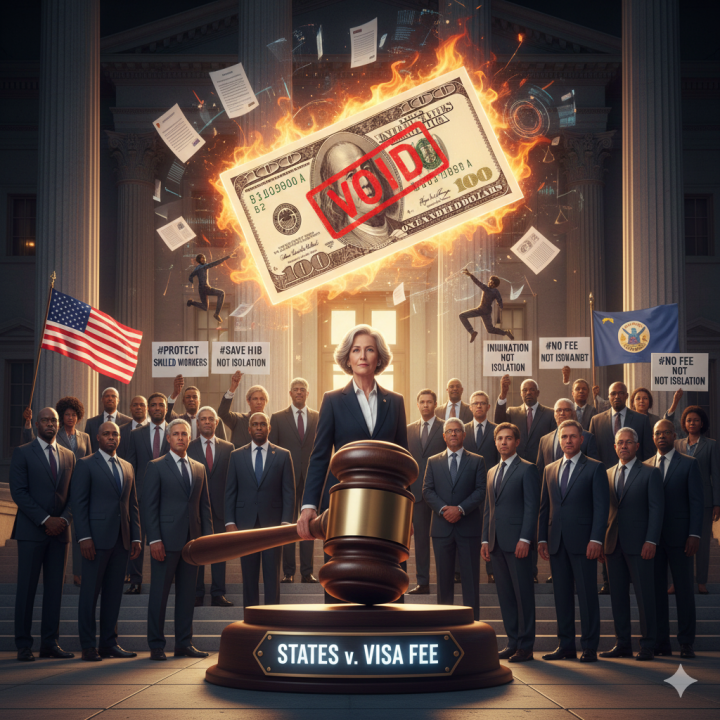
The states, including New York, Colorado, Washington, and Michigan, argue that the fee is unlawful and damaging to critical sectors of their economies. They contend that the fee is an illegal overreach because federal law permits visa fees only to cover administrative processing costs, which the $100,000 charge far exceeds. Additionally, the states assert that the administration exceeded its constitutional authority, as the power to levy such a fee rests with Congress.
The lawsuit highlights the detrimental impact the fee will have on key industries. Major technology hubs like Silicon Valley, as well as hospitals, universities, and K-12 schools, rely on H-1B visa holders to fill specialized positions and address labor shortages. The attorneys general argue that the high cost will exacerbate these shortages, threaten the quality of essential services, and stifle innovation, potentially harming U.S. global competitiveness.
This legal action is the first state-led challenge to the policy, joining separate lawsuits already filed by the U.S. Chamber of Commerce and other groups. The ongoing legal battle will determine the future of the H-1B visa program and the high fee, a ruling on which could significantly reshape U.S. immigration policy regarding high-skilled workers.