
- Expansion to eight private destinations by 2028
- Private-public partnerships involving local ownership and staffing
- Strategic use of beach clubs to mitigate overtourism
- Upcoming openings in Paradise Island and Santorini
Michael Bayley, president of Royal Caribbean, has addressed the company’s aggressive expansion into private destinations, asserting that these land-based projects benefit both travelers and local communities. The cruise line intends to grow its portfolio from two to eight private locations by 2028. Key upcoming projects include the Royal Beach Club on Paradise Island in Nassau, scheduled for December, and the Royal Beach Club Santorini, set to open in the summer of 2026. Bayley stated that these developments allow for better “master planning,” which he argues is a proactive solution to the challenges of overtourism often found in unplanned destination growth.
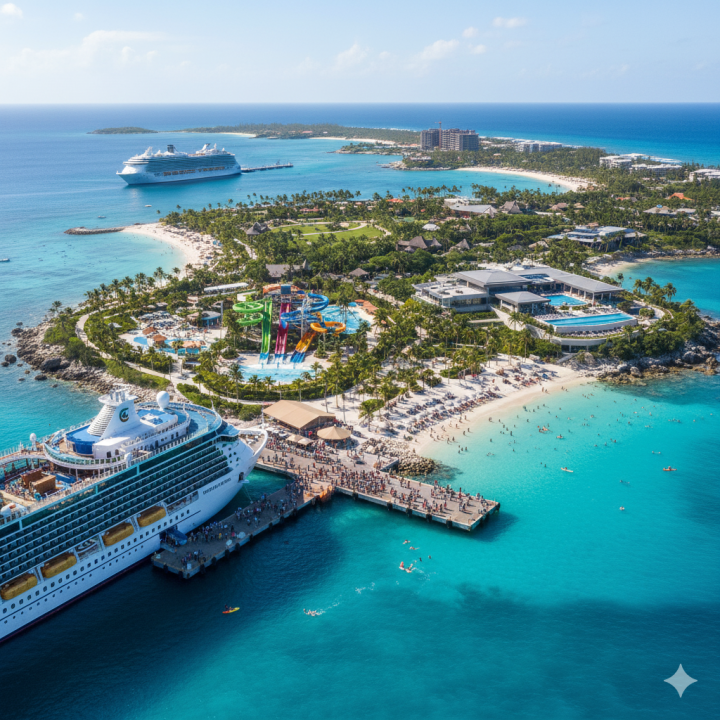
In response to concerns regarding the impact on local economies and the authenticity of the travel experience, Bayley described such criticisms as superficial. He highlighted the economic integration within these projects, noting that the Paradise Island location operates as a private-public partnership where Bahamian citizens hold a 49% stake. Furthermore, he emphasized that these destinations are staffed and supplied by local businesses. For example, the upcoming Mexico development is expected to create approximately 3,000 jobs, and the Santorini beach club will be entirely managed by the local community.
Regarding the choice of Santorini, Bayley acknowledged the island’s struggle with overtourism. He explained that by acquiring and redeveloping an existing beach club, Royal Caribbean can offer a more controlled and satisfying “Ultimate Santorini Day,” which helps manage the flow of passengers more effectively. While the current focus remains on beach clubs and private islands, Bayley suggested that the company’s future land-based investments, including potential hotel developments, will be driven by customer demand and satisfaction. The strategy represents a shift toward more curated, cruise-line-managed shore experiences that prioritize high guest satisfaction ratings and logistical efficiency.