
- Over 31 million Americans are expected to fly for Thanksgiving, setting a projected all-time record for air travel during the holiday period.
- This record travel coincides with the FAA’s mandatory 10% reduction in flights at 40 major airports due to the government shutdown.
- The busiest travel days are projected to be the Wednesday before (November 26, departures) and the Sunday after Thanksgiving (November 30, overall busiest day).
- The weather forecast predicts a split pattern, with dry, sunny conditions in the East and significant rain and colder temperatures in the West
Over 31 million Americans are projected to fly during the upcoming Thanksgiving travel period, setting an all-time high for air travel during this holiday. This record number, calculated by Airlines for America, translates to carriers expecting to move an average of 2.8 million passengers per day. The peak travel rush is anticipated between Friday, November 21, and Monday, December 1, with the heaviest travel days expected to be the Wednesday before (November 26, for departures) and the Sunday after (November 30, likely the busiest day of the year).
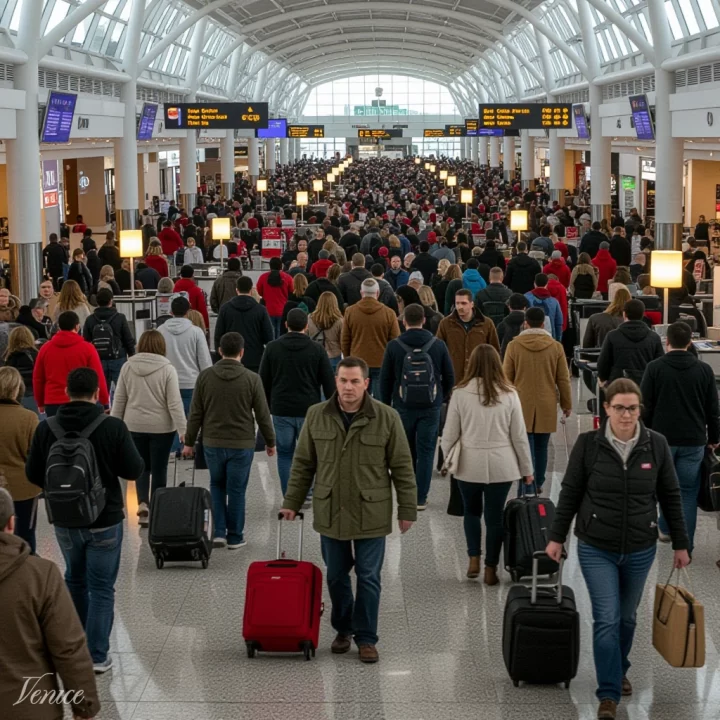
These record projections collide with significant operational challenges in the aviation sector. The Federal Aviation Administration (FAA) has mandated a 10% reduction in flights at 40 of the nation’s busiest airports due to staffing shortages caused by the ongoing government shutdown. Transportation Secretary Sean Duffy has warned that air traffic operations could be severely limited if the shutdown persists. Domestic airfare prices were already reported to be up more than 3% year-over-year in October.
The expected weather conditions across the U.S. for Thanksgiving week present a patchwork pattern. The East Coast is broadly forecast to experience dry, mild-to-chilly conditions, with sunshine expected in the Northeast and Southeast regions. Conversely, the West Coast, including the Pacific Northwest and California, is expected to see rain and colder-than-normal temperatures. Travelers in the Intermountain West and Northern New England should prepare for potential disruptions from snow in higher elevations. Travelers are advised to fly on Thanksgiving Day itself, which is historically the quietest day, and to check local forecasts closer to their departure dates.