
- Next-generation jets like the Global 8000 enable nonstop flights over 8,000 nautical miles.
- High cruise speeds allow executives to conduct same-week international business trips.
- Low cabin altitudes and wellness-focused designs minimize traveler fatigue and jet lag.
- Increased access to secondary airports supports economic growth in regional business centers.
The certification of the Bombardier Global 8000 by the European Union Aviation Safety Agency marks a pivotal shift in the landscape of business tourism. This milestone allows the ultra-long-range jet to operate commercially across Europe, joining prior approvals from the United States and Canada. As corporate travel moves away from traditional commercial hubs and rigid schedules, these next-generation aircraft are enabling a new era of mobility defined by unprecedented speed, range, and a focus on executive well-being.
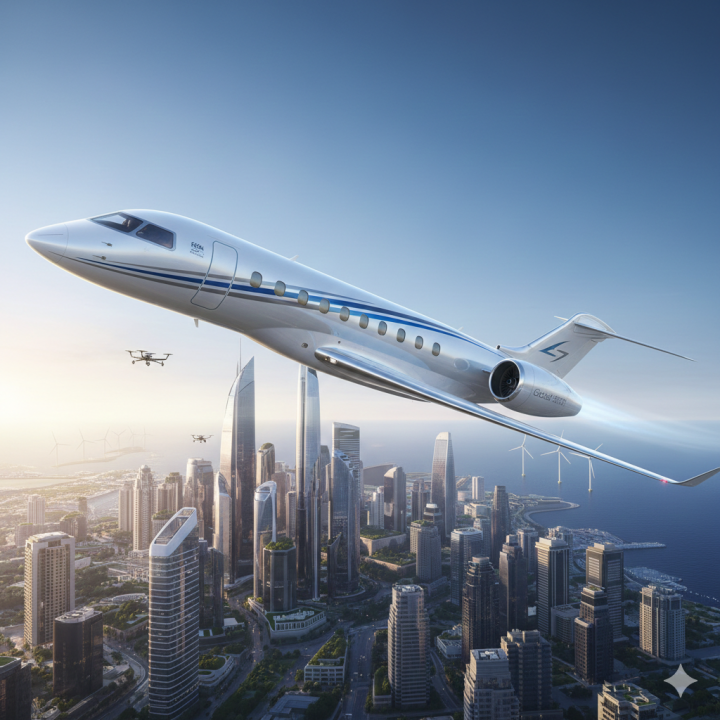
The technical capabilities of these jets are transforming how multinational corporations approach global operations. With a top speed of Mach 0.95 and a range of 8,000 nautical miles, the Global 8000 allows for nonstop travel between distant economic centers like London and Singapore or New York and Hong Kong. This eliminates the need for time-consuming layovers and logistical complexities, allowing executives to maintain momentum during intense deal-making cycles. The ability to fly directly into secondary airports also means that regional business clusters and smaller financial districts can become high-value destinations, bypassing congested major hubs.
Beyond mere speed, the future of executive travel is increasingly focused on “productivity science” and health optimization. Modern cabin designs now prioritize low cabin altitudes to reduce the physiological toll of long-haul flights, such as dehydration and jet lag. These aircraft serve as hybrid environments—combining a mobile office with a wellness suite—to ensure that leaders arrive ready for immediate engagement. As geographic distance becomes less of a barrier, business tourism is evolving into a fluid, continuous flow of high-frequency engagement. This transformation suggests that corporate aviation is transitioning from a luxury perk to a critical operational tool for navigating a competitive global market.