
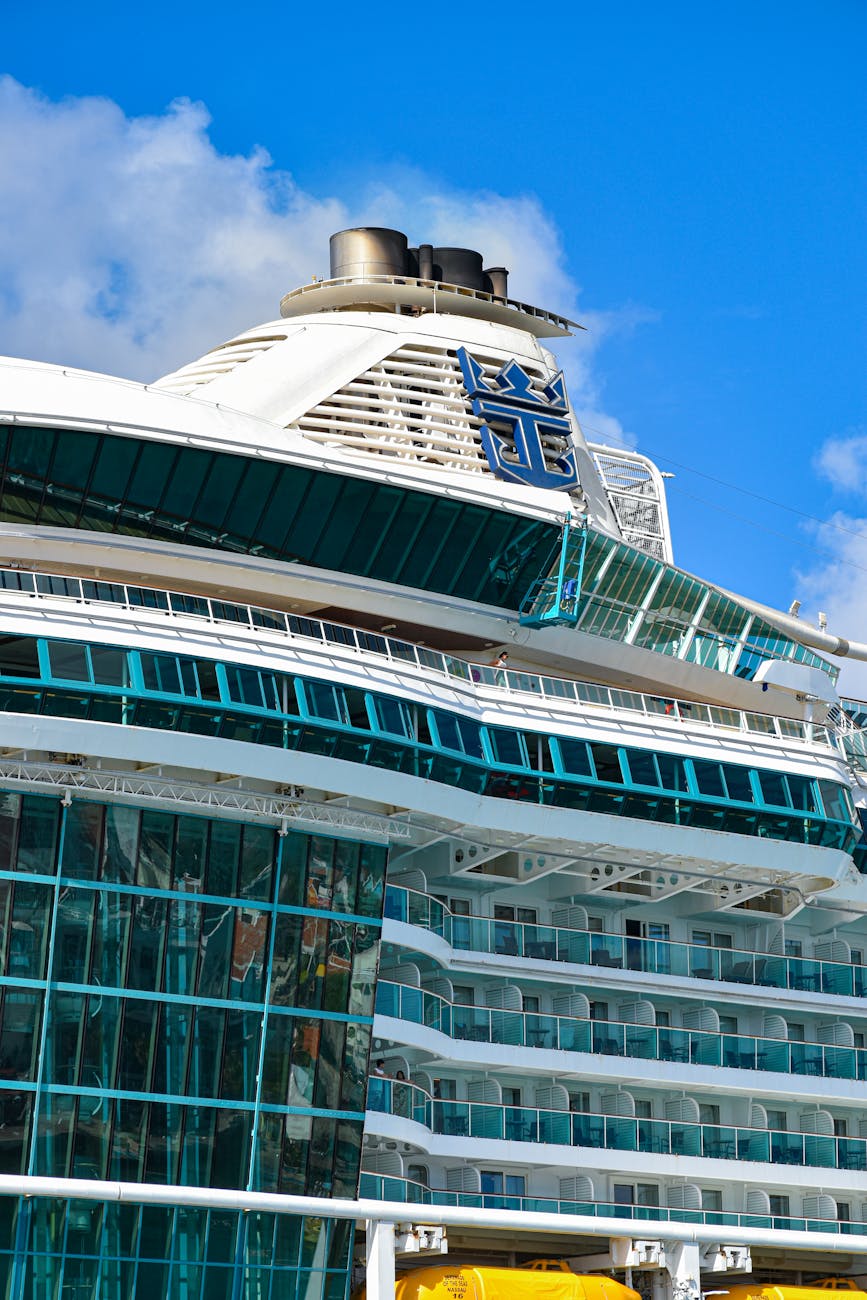
Royal Caribbean is making significant strides in maritime sustainability with the Icon Class, which serves as a primary testbed for technologies aimed at achieving a net-zero cruise ship by 2035. The fifth Icon Class ship, set for 2028, will incorporate a suite of advanced environmental systems as a standard part of its design blueprint.
Primary Sustainability Technologies
- Dual-Fuel Propulsion Systems: The vessel will utilize liquefied natural gas (LNG), which is currently the cleanest-burning fossil fuel available for the maritime industry. This technology virtually eliminates sulfur dioxides and particulate matter while significantly reducing nitrogen oxide emissions.
- Fuel Cell Integration: This ship is designed to include fuel cell technology, which uses a chemical reaction to produce electricity without combustion. These cells will help power “hotel functions”—the energy-intensive onboard services like lighting, elevators, and air conditioning—allowing for zero-emission operations in specific scenarios.
- Waste-to-Energy Systems: The Icon Class features the industry’s first systems capable of turning solid waste directly into energy on board. Technologies like Microwave-Assisted Pyrolysis (MAP) convert waste into synthesis gas (syngas) that the ship can use for fuel, significantly reducing the amount of waste sent to landfills.
- Advanced Water Management: Roughly 90% of the freshwater used on board is produced through high-efficiency desalination and reverse osmosis plants. The ship also repurposes heat from its engines to warm water for showers and whirlpools, and treats air conditioning condensation for use in laundry facilities.