
- A $100 surcharge will be applied to international tourists visiting 11 major U.S. National Parks, starting January 1, 2026.
- The fee aims to generate funds for improving park infrastructure, maintenance, and conservation efforts.
- U.S. residents are prioritized with an $80 annual pass, several fee-free days, and an overall lower fee structure compared to non-residents.
- The affected parks include iconic sites like Yellowstone, Yosemite, Grand Canyon, Rocky Mountain, and Acadia National Park.
Effective January 1, 2026, the United States, under the Trump administration, is implementing a new policy that introduces a $100 surcharge for international tourists visiting 11 of the most popular U.S. National Parks. This fee is added on top of the regular entrance costs, potentially raising the total single-visit fee for a non-resident to over $135. The policy is being adopted in states including California, Wyoming, Florida, Utah, Maine, and Montana, and impacts iconic sites like the Grand Canyon, Yellowstone, and Yosemite. The stated primary objective of this surcharge is to generate essential funds specifically for the development of park infrastructure and conservation efforts.
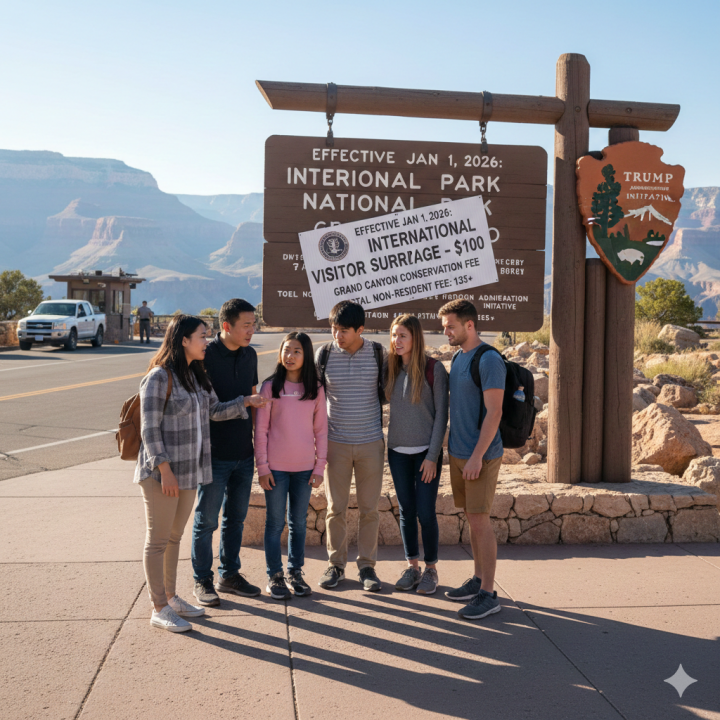
This change is part of a broader “America-first entry fee policy” designed to prioritize U.S. taxpayers, who already contribute to the National Park System through taxes. While international visitors face this substantial price increase, U.S. residents retain the ability to purchase an $80 annual pass for unlimited access to all National Park Service sites. Furthermore, U.S. citizens will benefit from several new “patriotic” fee-free days throughout the year, such as on Presidents Day and Independence Day weekend, which are not available to foreign tourists.
The new fee structure means that the annual pass price for foreign tourists is set to increase to $250, more than triple the cost for U.S. residents. The policy’s supporters argue it is a necessary step to ensure foreign visitors contribute their fair share to the upkeep of the parks. However, critics express concern that the surcharge could deter international tourism, negatively impacting local economies near the parks, and potentially leading to a perception of exclusionary nationalism. In a related update, the “America the Beautiful” pass system will transition to a fully digital format beginning in 2026.