
- Hartsfield–Jackson Atlanta International Airport (ATL) is identified as the top US passenger hub to avoid, primarily due to extreme passenger density and having the highest volume of lost luggage incidents.
- The ranking is based on a calculated “Avoid Score,” derived from data on flight delay percentage, passenger-to-space density, and the number of lost luggage searches.
- Newark Liberty International Airport (EWR) is a notorious second place, with the highest frequency of flight delays among the top ten, affecting nearly 29% of its air traffic.
- The chronic problems across the top ten airports are fundamentally driven by an imbalance of high passenger traffic versus inadequate airport size, resulting in frustrating overcrowding and operational failure
A dismal new December 2025 report on air travel disruptions has exposed the most frustrating US passenger hubs, giving travelers fair warning about which airports guarantee holiday misery. The study meticulously calculated an “Avoid Score” by aggregating data on delays, horrifying lost luggage rates, and unbearable passenger density, pinpointing the locations where a smooth journey is simply an illusion. It is clear that infrastructural failures and overcrowding are severely compromising the flying experience.
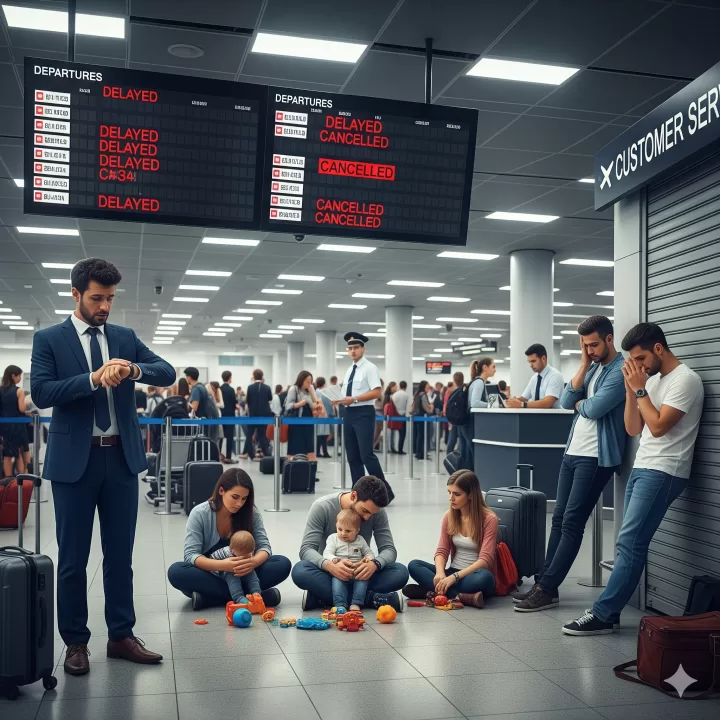
Hartsfield–Jackson Atlanta International Airport has earned the unfortunate distinction of being the absolute worst, primarily because it funnels an unmanageable 108 million people annually through a hopelessly small space, leading to suffocating crowds and endless queues. Adding insult to injury, it also suffers the highest rate of lost luggage, turning anticipation into outright despair for thousands of travelers.
Following closely in this shameful ranking is Newark Liberty International Airport, which subjects travelers to the highest percentage of flight delays on the list—a staggering 28.8% of all flights are delayed or canceled. Even with lower passenger volume, its tiny footprint creates the second-highest traveler density, ensuring massive congestion and frustration.
Other major airports like Seattle-Tacoma, Harry Reid, and Los Angeles also contributed to the miserable top ten, all plagued by common issues of substantial delays and overcrowding. This study unfortunately confirms that for many major US airports, logistical nightmares and travel disruption are now the unfortunate standard, and travelers must adjust their plans accordingly to save themselves from unnecessary agony.