
- International Travel Freeze: Five key countries—Canada, Germany, Spain, South Korea, and the UK—have significantly reduced travel to the U.S., leading to a record drop in visitor arrivals.
- Core Contributing Factors: The decline is driven by a combination of strict U.S. immigration policies, a strong U.S. dollar making travel more expensive, and geopolitical tensions.
- Significant Economic Impact: The reduction in tourism is causing substantial revenue loss, impacting the hospitality, retail, and entertainment sectors and threatening numerous jobs in tourism-dependent states.
- Need for Policy Reassessment: The situation underscores a critical need for the U.S. to re-evaluate its travel and border policies to restore its image as a welcoming global destination.
The United States is currently experiencing a period of significant transformation within its tourism sector, presenting a unique opportunity to innovate and strengthen its appeal to international visitors. Recent data indicates a shift in travel patterns, with fewer arrivals from key partners like Canada, Germany, Spain, South Korea, and the UK. This change offers valuable insights into the evolving preferences and considerations of modern global travelers.
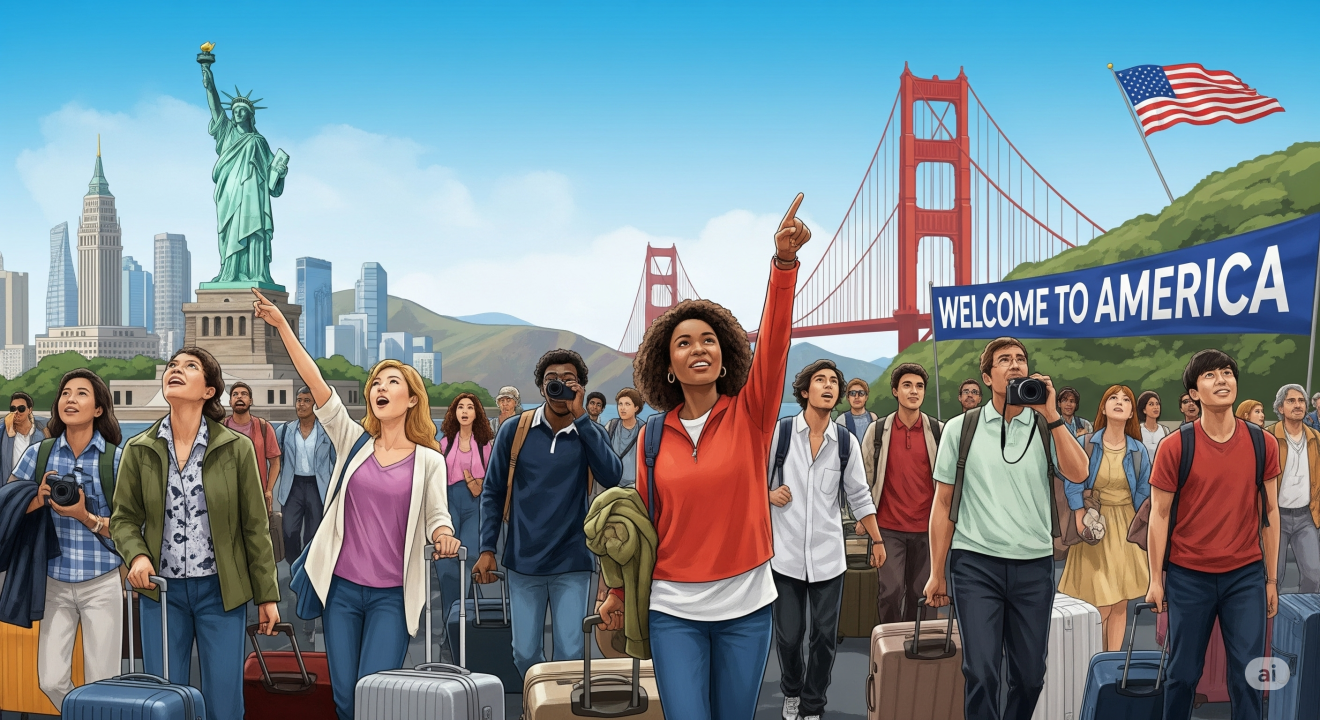
Several factors are shaping this new landscape. Economic elements, such as the strong U.S. dollar, are encouraging travelers to explore a variety of international destinations. At the same time, discussions around U.S. border and immigration policies have become a prominent part of the global conversation, influencing how potential visitors perceive the entry process. In response to these dynamics, countries like Germany have updated their travel advisories, providing their citizens with detailed guidance to ensure smooth journeys.
This moment provides the U.S. tourism industry with a clear path forward. By understanding the economic and policy-related factors at play, stakeholders have the chance to develop fresh strategies that resonate with a global audience. The current situation highlights the importance of fostering a welcoming environment and streamlining the visitor experience. As the industry adapts, there is great potential to redefine the U.S. as a premier, accessible, and inviting destination for the future. This is a constructive time for reassessment and growth, promising a revitalized and more resilient tourism economy that is attuned to the needs of travelers from around the world.