
- Sudden Steering Casualty Identified: The NTSB confirmed that the tanker Atlantic Asphalt suffered a steering malfunction roughly two minutes before impact, leaving its rudder stuck to starboard and directing the vessel toward the east bank.
- Immediate Crew Warnings Captured: Voyage data recorder audio revealed that the tanker crew rapidly sounded warning whistles, radioed for assistance, and ordered emergency anchor deployment prior to the crash.
- Heroic Multi-Agency Rescue Success: Federal, state, local, and private responders acted swiftly together to rescue all approximately 190 passengers and crew members from the capsized paddleboat American Heritage.
- Thorough Federal Investigation Underway: A 16-member NTSB team is analyzing over nine hours of electronic vessel data, conducting crew interviews, and gathering public video evidence ahead of a 30-day preliminary report
A remarkable story of rapid maritime emergency response and transparent federal investigation is unfolding along the Mississippi River in New Orleans. According to the National Transportation Safety Board, investigators have recovered critical voyage data recorder audio and operational metrics from the asphalt tanker Atlantic Asphalt following Friday afternoon’s collision with the docked river cruise paddleboat American Heritage. Just two minutes before impact, the tanker experienced an unexpected steering casualty that locked its rudder toward the starboard side, causing the vessel to veer toward the river’s east bank.
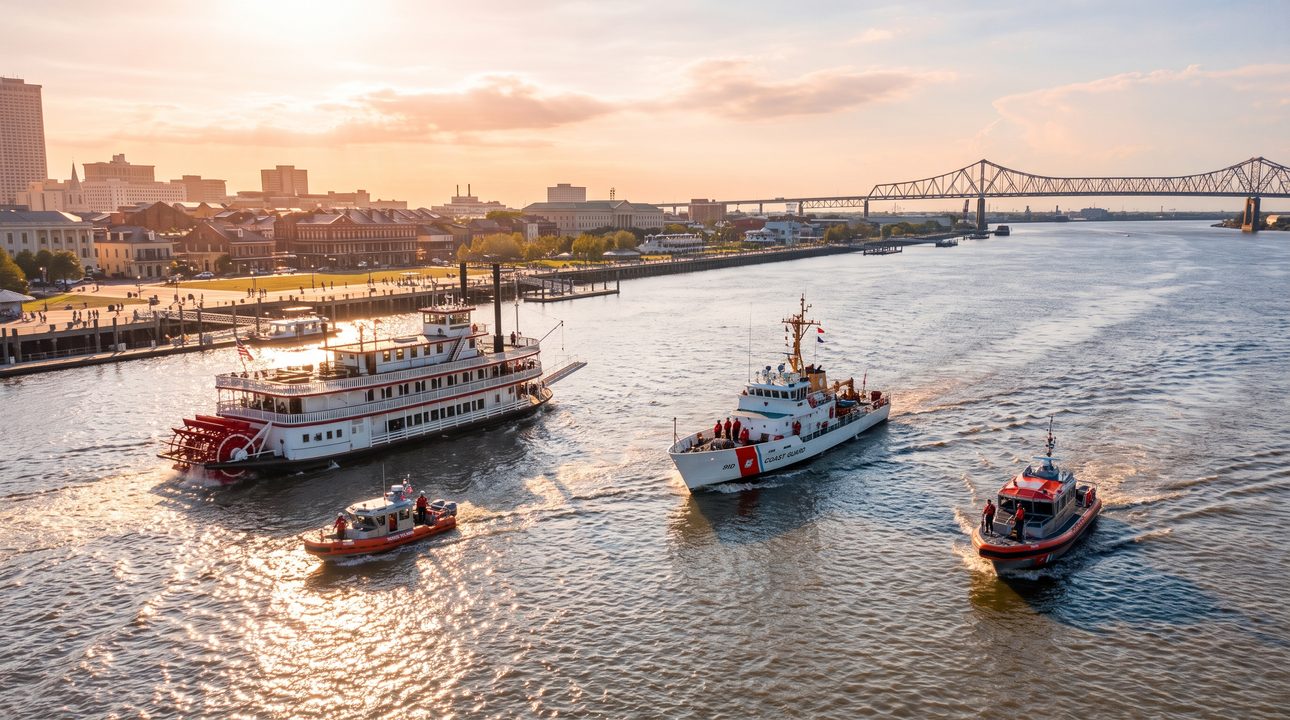
What stands out most from the recovered bridge audio is the immediate, disciplined reaction of the crew under intense pressure. As soon as the steering issue occurred, the crew sounded warning whistles, broadcast urgent radio alerts requesting assistance, and issued emergency ship-handling and anchor deployment orders to alert everyone nearby. That quick communication proved vital when the collision occurred, setting off what officials have praised as an extraordinary, coordinated rescue effort. Federal, state, and local responders—alongside private vessels, harbor workers, firefighters, and everyday bystanders—sprang into action within moments, successfully bringing every single one of the roughly 190 passengers and crew members aboard the American Heritage safely out of the water.
Now, a dedicated 16-member NTSB investigative team is in New Orleans analyzing more than nine hours of electronic recorder data and preparing crew interviews. By pinpointing the exact mechanical or operational cause of the steering failure, federal safety experts aim to strengthen navigation safeguards and protect future river commerce and passenger voyages. With a preliminary report expected within 30 days, the investigation highlights how modern data technology and heroic community teamwork combine to keep waterways resilient and safe.