
- Iranian airspace is now largely avoided by commercial carriers following recent air strikes, creating a major new travel disruption
- Flight times on certain intercontinental routes have increased by over 50 percent, leading to higher fuel costs and ticket prices
- Long-haul flights that previously flew non-stop may now require technical fuel stops in cities like Rome to complete their journeys
- Extended flight durations are causing crews to reach their legal work limits faster, requiring airlines to hire more staff to cover the same routes
The global aviation landscape has undergone a dramatic transformation following the recent military strikes by American and Israeli forces, which have effectively closed Iranian airspace to commercial traffic. This new “dead zone” joins the existing four-year closure of Ukrainian airspace, creating a massive geographical gap that forces airlines to redraw their traditional flight maps. For the “Big Three” Middle Eastern carriers—Emirates, Etihad, and Qatar Airways—as well as international airlines connecting Europe to Asia and North America, this disruption has turned a previously bustling corridor into a void flanked by two narrow, congested traffic lines to the north and south.
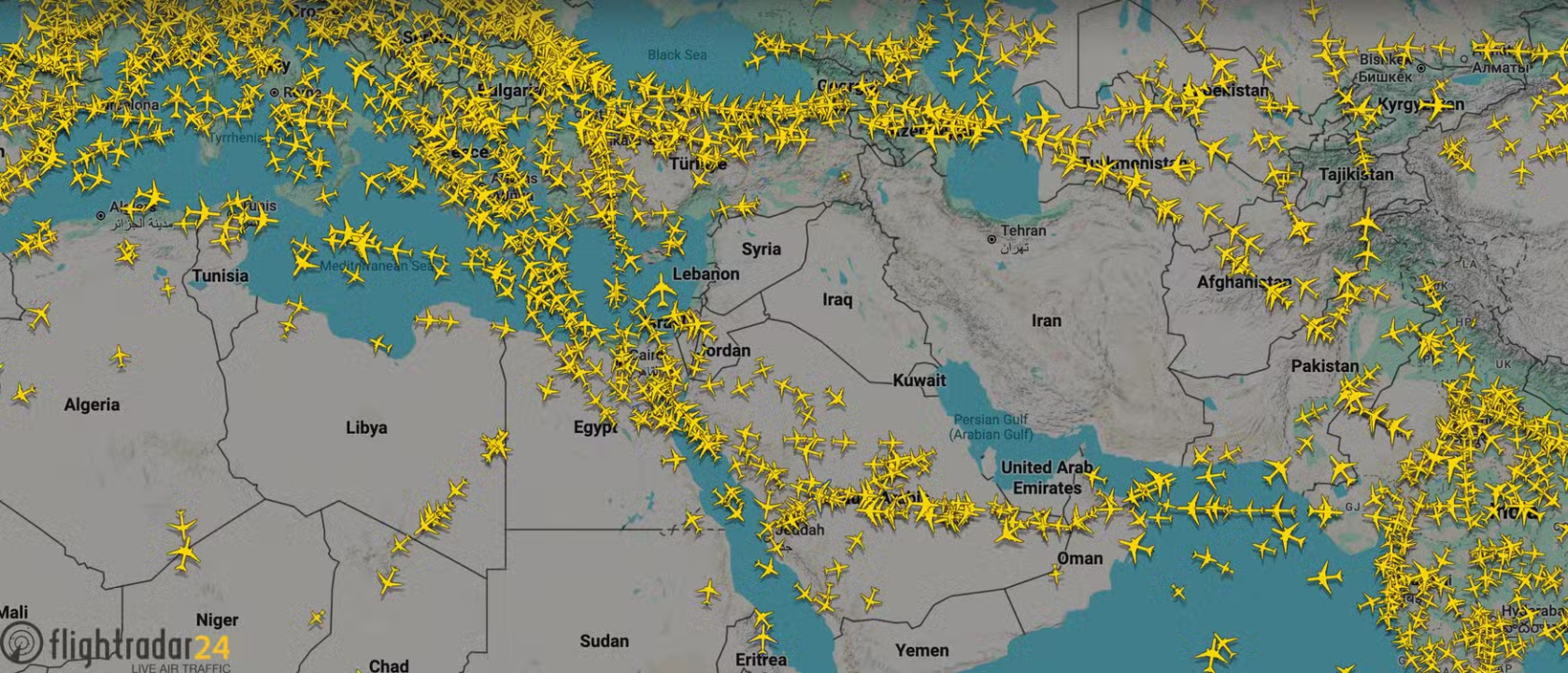
The operational consequences of these detours are significant, extending far beyond simple delays. Many routes that previously took five hours are now requiring up to seven and a half hours to complete. These extended flight paths significantly increase fuel consumption and operational costs, and in extreme cases, push aircraft beyond their maximum range. For instance, Air India has reported that its longest services to New York and Newark now require technical fuel stops in Rome because the new routings exceed the aircraft’s fuel capacity.
Beyond fuel and logistics, the industry is grappling with complex human resource challenges. The added flight time frequently causes flight crews to exceed their legal duty hours, necessitating larger crew complements or unplanned stopovers to swap personnel. This adds another layer of financial burden to airlines already managing a lucrative but volatile market at the crossroads of Europe and Asia. Aviation analysts suggest that these “air bridges” are essential for global connectivity, and their continued closure represents a significant economic stress test for the international travel sector.Important Topics to Know